
Usama ibn Munqidh
Emir of Shayzar; diplomat, man of letters, and memoirist of the Crusading era
He moved between the courts of Zengi, the Fatimids, Nur al-Din, and Saladin — then wrote it all down in the Book of Contemplation.
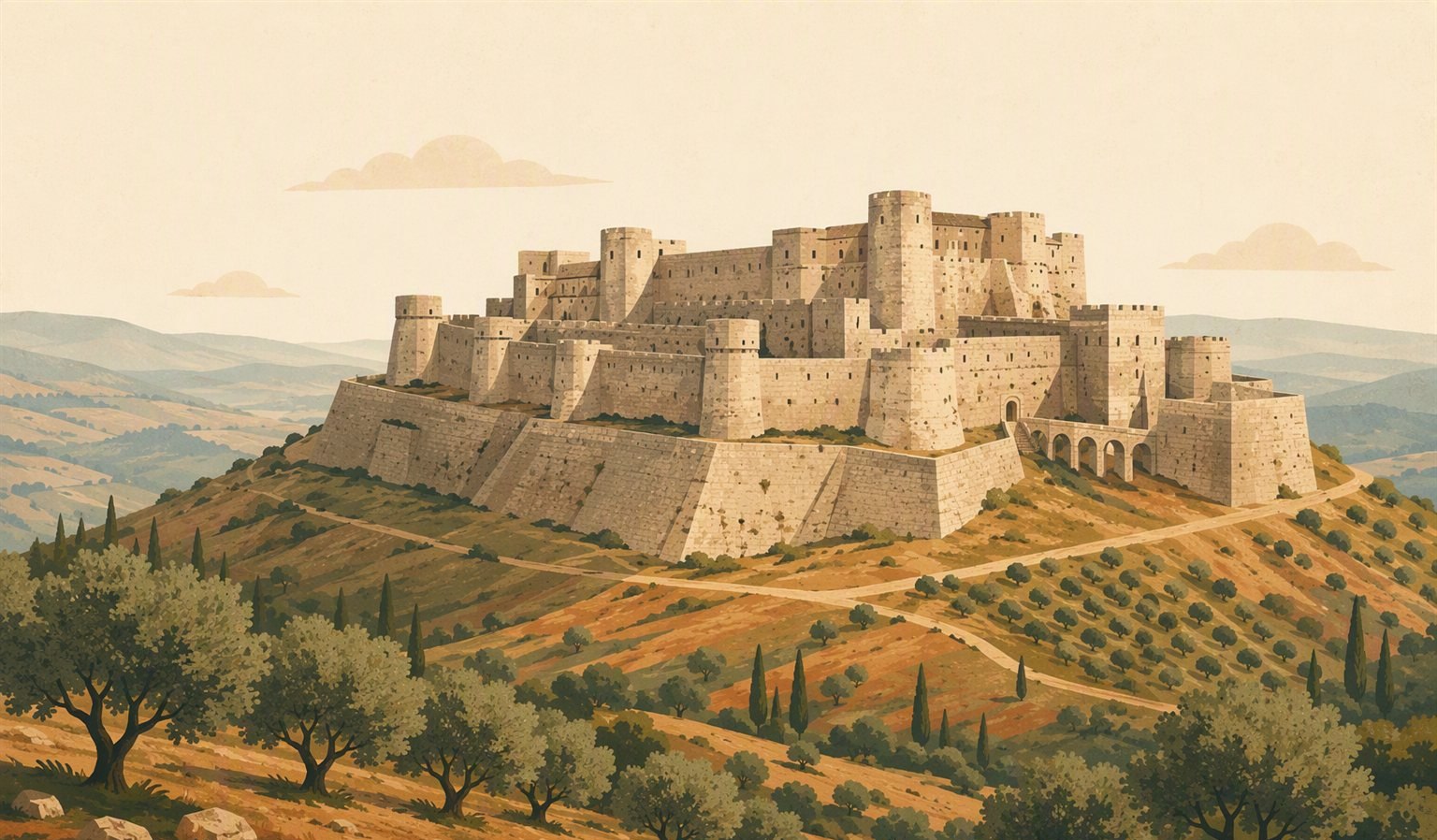
Usama ibn Murshid ibn Ali ibn Munqidh was born on 4 July 1095 CE at the castle of Shayzar on the Orontes, into the Arab dynasty of the Banu Munqidh that ruled the fortress. His uncle Sultan expelled him from Shayzar in 1138 CE, beginning nearly half a century of movement between courts: he served Imad al-Din Zengi in Mosul, then the Burids of Damascus under Mu'in al-Din Unur, then the Fatimid court in Cairo (1144–1154), then Nur al-Din Zengi in Damascus.
In 1157 CE most of his family perished in the great Shayzar earthquake. He later moved to the Artuqid court at Hisn Kayfa, and in 1174 returned to Damascus under Saladin, spending his final years in retirement after relations between them cooled. He died in November 1188 CE at the age of ninety-three and was buried on Mount Qasyun.
His best-known work is the Kitab al-I'tibar (Book of Contemplation), memoirs dictated in old age that blend moral lessons with storytelling, including his observations of the Franks during the Crusading era — a mixture of hostility, curiosity, and occasional friendship — making it one of the rare Arabic texts to convey a personal voice from that period. The book survives in a single incomplete manuscript discovered by the orientalist Hartwig Derenbourg in Madrid in 1880.
In his own time he was known more as a poet than a historian: Ibn Khallikan devoted his biographical entry on Usama almost entirely to his verse, and he also wrote "Lubab al-Adab" on rhetoric and prose.