
Philip the Arab
Roman emperor (244–249 CE), born in Shahba in the Hauran
The son of Shahba who took Rome's throne and celebrated the city's thousandth year.
Marcus Julius Philippus was born around 204 CE in the village of Shahba in the Hauran, in the Roman province of Arabia Petraea, to a local family of Arab descent — hence his later epithet "Philip the Arab." He rose through the army to become praetorian prefect under Gordian III.
When Gordian died in Mesopotamia in 244 CE during the campaign against the Sasanian Empire — ancient sources differ on whether Philip was implicated in his death — the army proclaimed Philip emperor. He quickly made peace with the Sasanian king Shapur I in exchange for a payment, then returned to Rome, where he won the Senate's recognition.
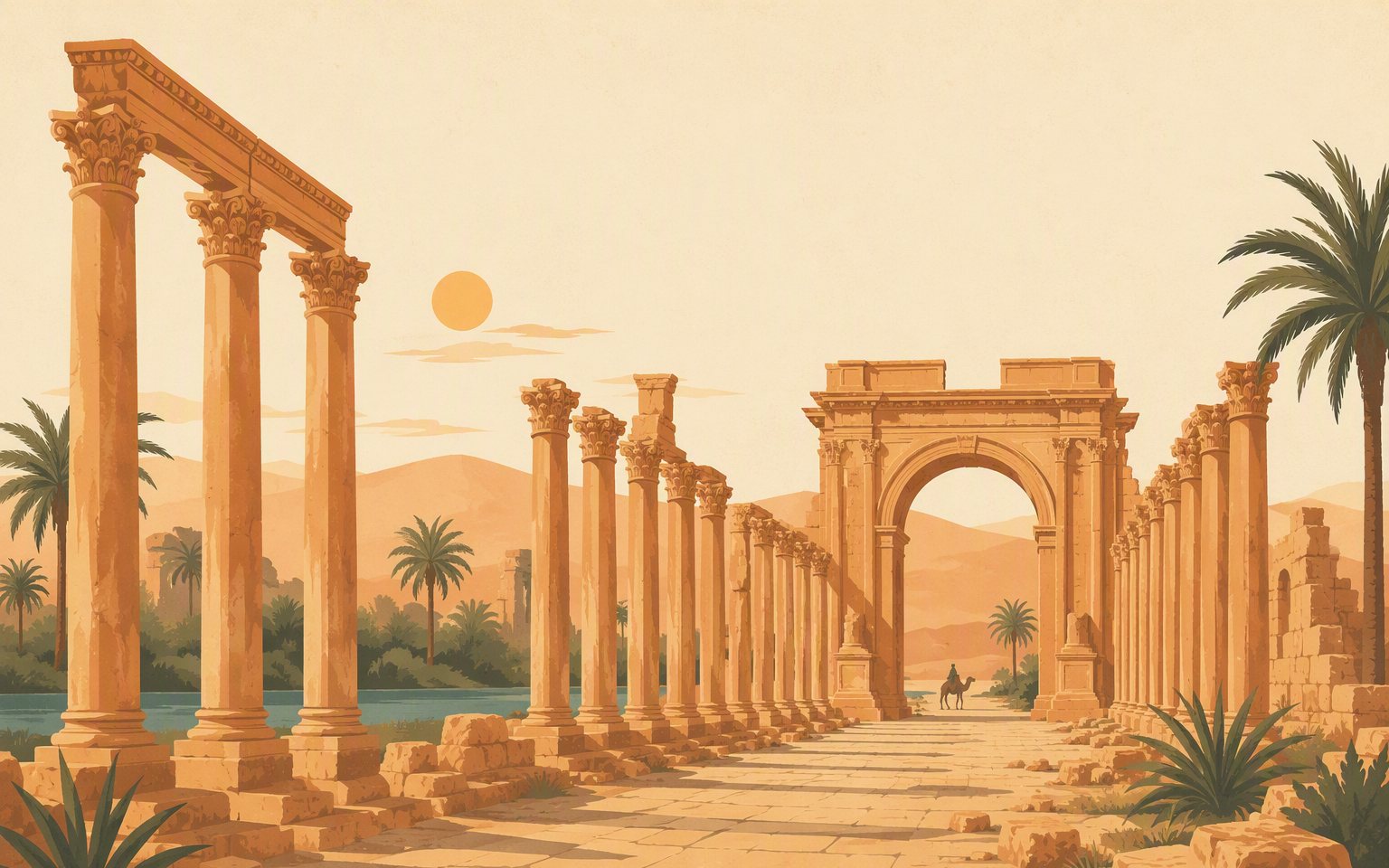
The best-known event of his reign was the celebration in 248 CE of Rome's thousandth anniversary (the Ludi Saeculares), with lavish games and spectacles. He also rebuilt his home village of Shahba, renaming it Philippopolis; its Roman ruins survive to this day.
In 249 CE the Danubian army proclaimed its commander Decius emperor, and the two armies met near Verona in northern Italy, where Philip was defeated and killed in September 249. The Christian historian Eusebius later described Philip as the first Christian Roman emperor, but most modern historians doubt this account, as his coinage followed the traditional Roman state religion throughout his reign.