
Nizar Qabbani
Syrian poet and diplomat from Damascus, one of the most prominent Arabic-language poets of the 20th century
The poet of love and women who, after the 1967 defeat, turned his verse into a mirror of Arab political failure.
Nizar Tawfiq Qabbani was born in Damascus on 21 March 1923 into an old Damascene family; his grandfather Abu Khalil al-Qabbani is considered a pioneer of Arab theatre. He studied law at the University of Damascus, graduating in 1945, and while still a student published his first collection, "Qalat li al-Samra" (The Brunette Told Me, 1944), which stirred controversy with its frank treatment of love and women.
He joined the Syrian diplomatic service, posted to Cairo, Ankara, London, Madrid, Beijing and Beirut, until he resigned in 1966 for poetry, founding a Beirut publishing house under his own name.
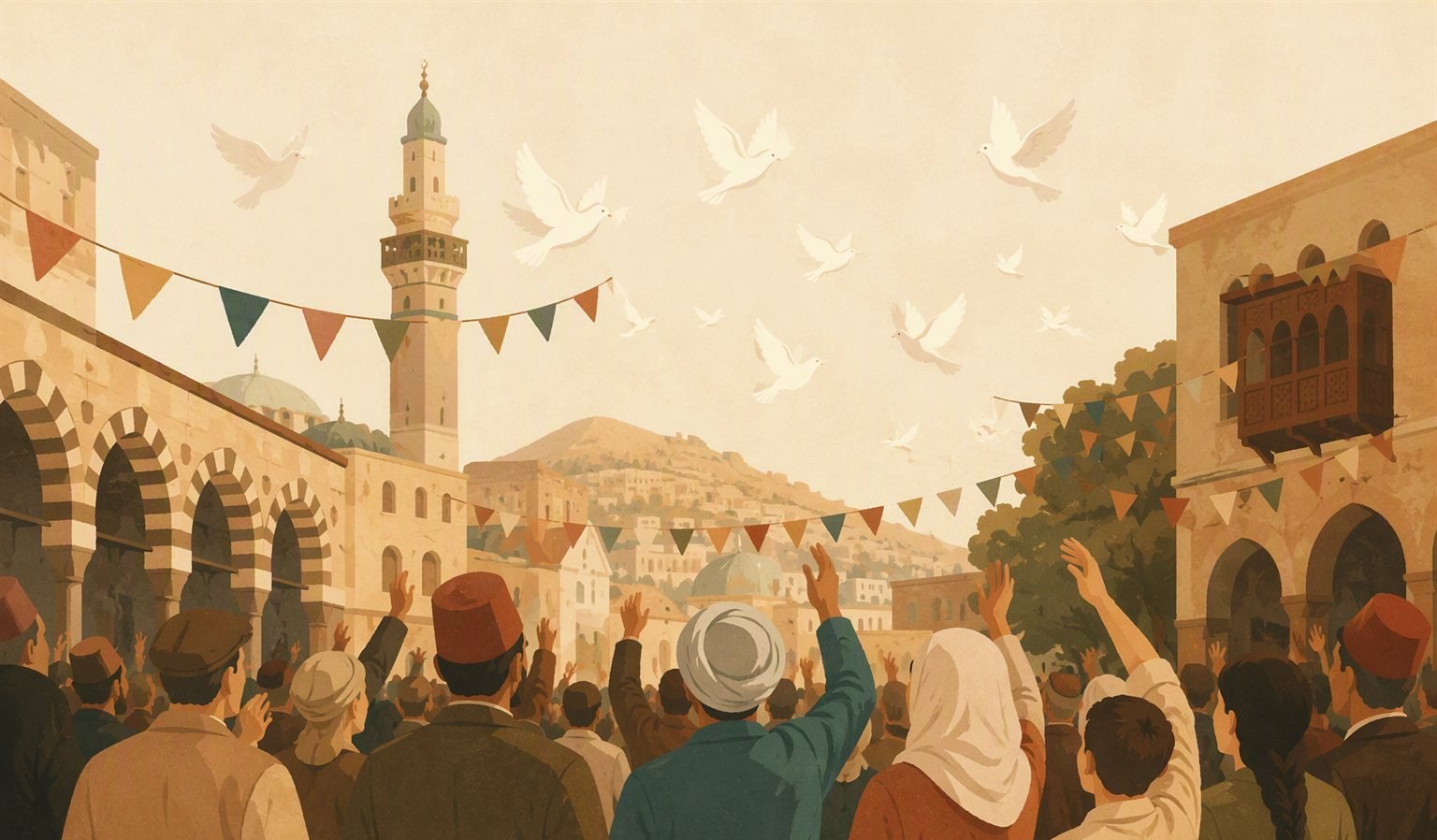
He became famous for love poetry in a simple, graceful language sung by the greatest Arab singers, with Damascus and its jasmine ever-present in his verse. The suicide of his sister, who had refused a forced marriage, marked him deeply, and his poetry championed Arab women against patriarchal tradition.
After the June 1967 defeat he turned to political poetry; his book "Hawamish ala Daftar al-Naksa" (Marginal Notes on the Book of the Setback) caused a storm across the Arab world, to the point that his poems were banned from some media. In 1981 his second wife, the Iraqi Balqis al-Rawi, was killed in the bombing of the Iraqi embassy in Beirut where she worked; he mourned her in his famous poem "Balqis".
He spent his final years in London, where he died on 30 April 1998; in accordance with his will, his body was carried to Damascus and buried in the family cemetery.