Architecture & landmarks
From the Umayyad Mosque to Krak des Chevaliers — stone layers telling ten thousand years.
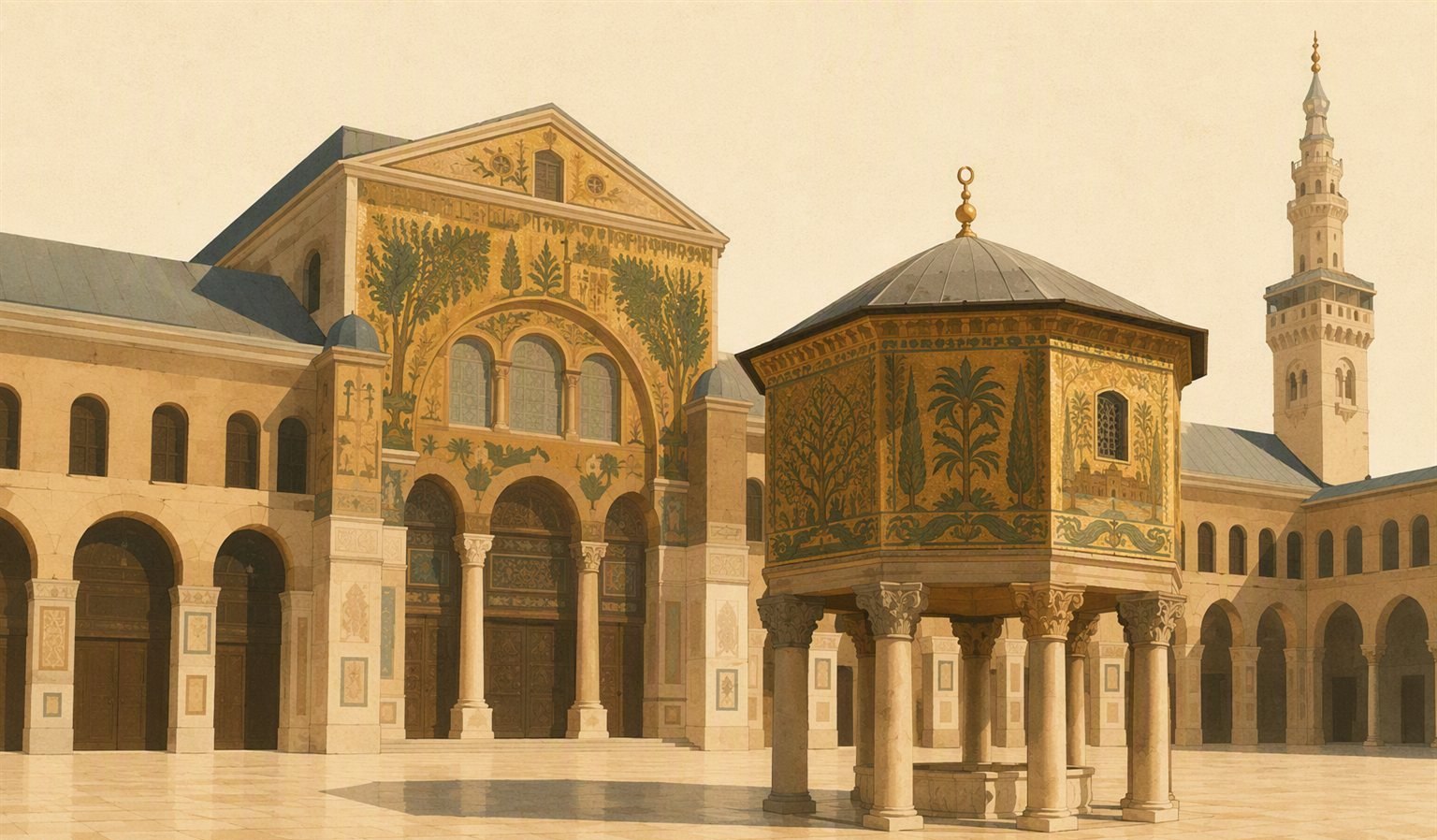
In the heart of Damascus stands the Umayyad Mosque, built by the caliph al-Walid ibn Abd al-Malik between 706 and 715 CE on the site of the Church of St John the Baptist, which itself stood over a Roman temple of Jupiter — a living example of civilisational layering: Roman columns, golden Byzantine-style mosaics, and minarets and domes added in later centuries.
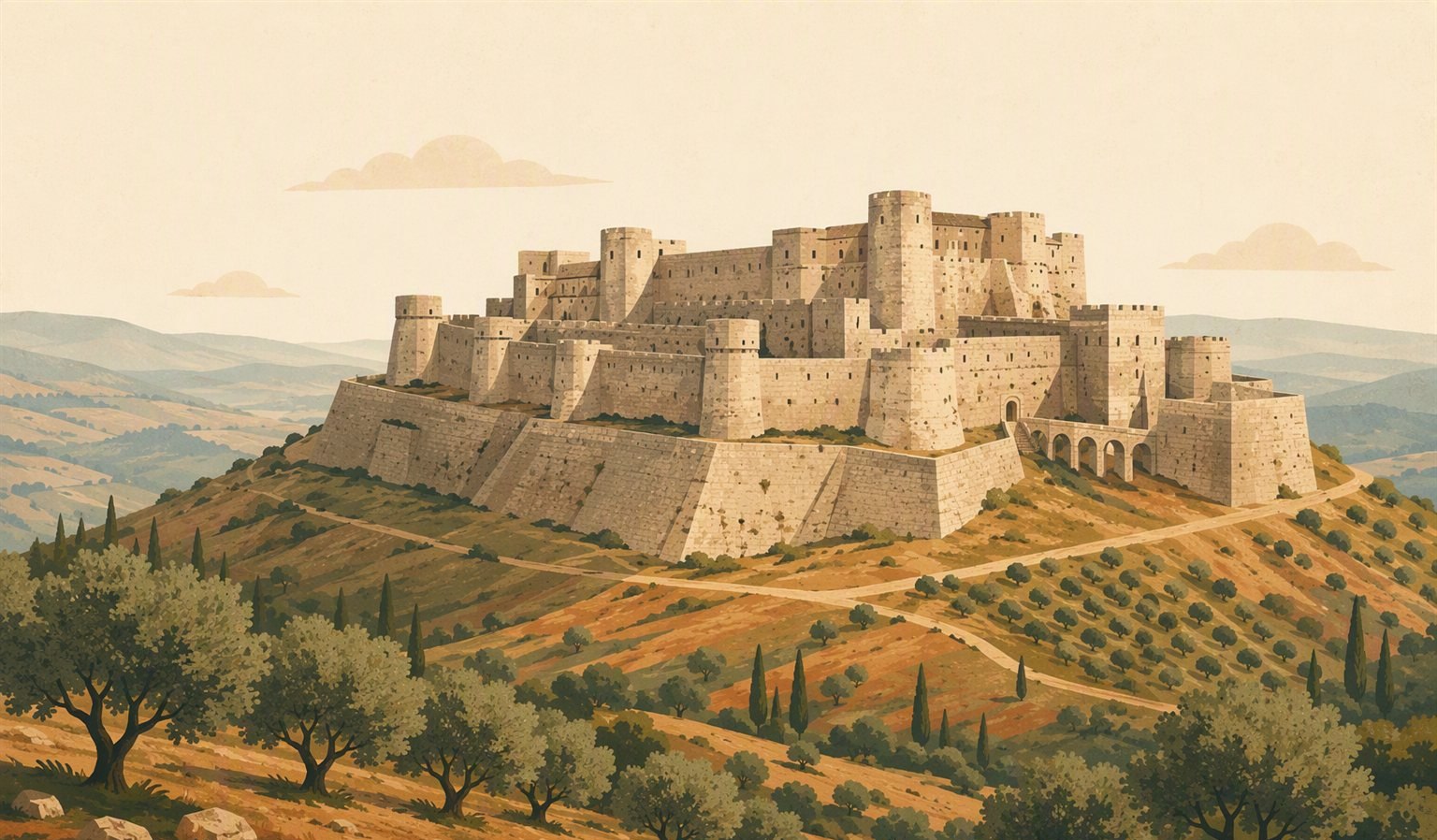
In Aleppo, the Citadel rises over a mound inhabited since the third millennium BCE, taking its present form in the Ayyubid era under al-Aziz Muhammad in the 13th century, with its rock-cut moat and ingenious bent-entrance gate — a masterpiece of defensive engineering. West of Homs, the Hospitaller knights built Krak des Chevaliers — the most complete surviving Crusader castle in the world — until it fell to Sultan Baibars in 1271.
Other treasures of Syrian architecture include:
- the Dead Cities: some 700 abandoned Byzantine settlements in the limestone massif of northwest Syria — basilicas, houses, and presses from the 5th–6th centuries
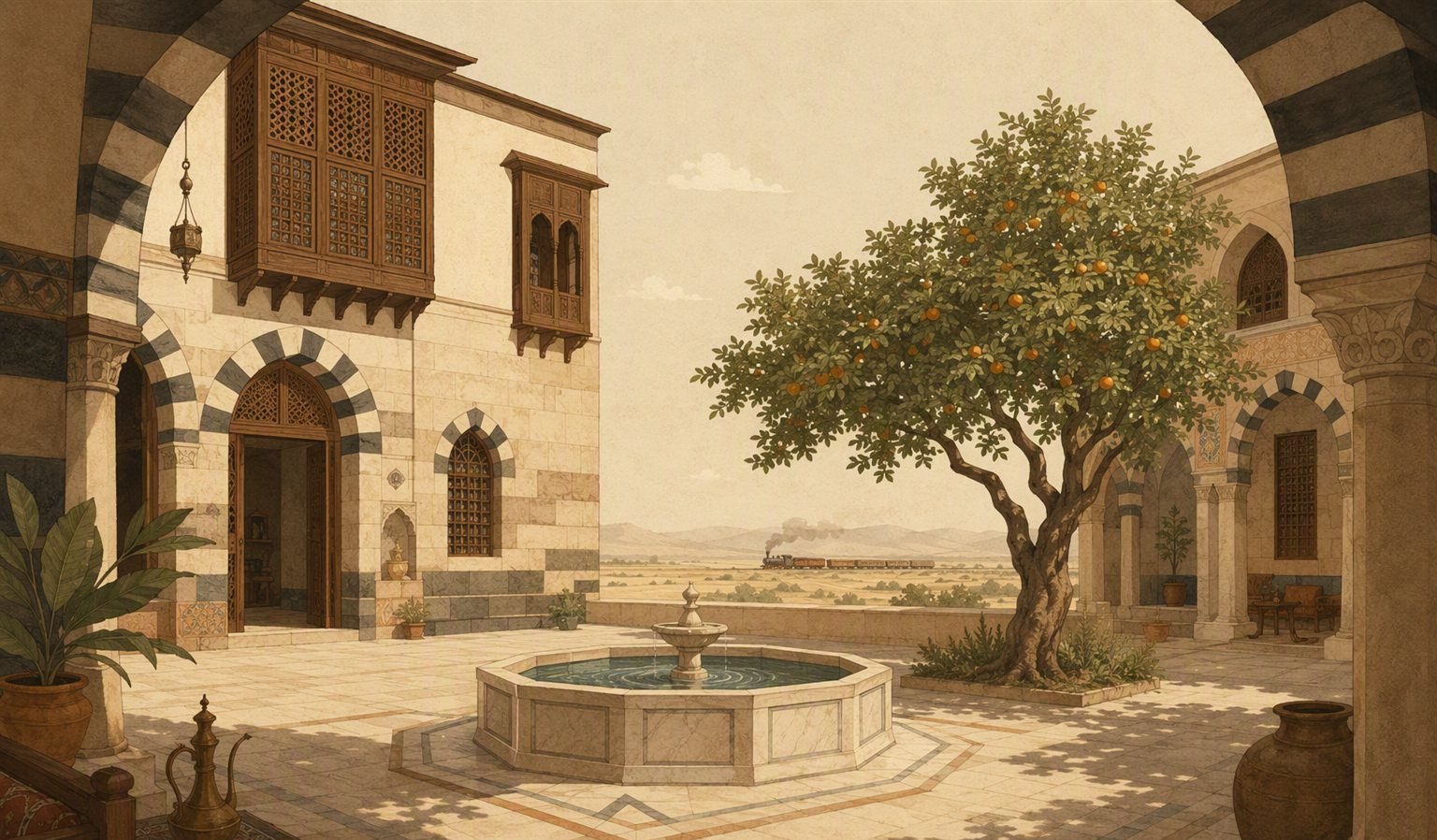
- the courtyard houses of Damascus and Aleppo: homes wrapped around inner courts with fountains and iwans, hidden behind vaulted souqs and merchant khans
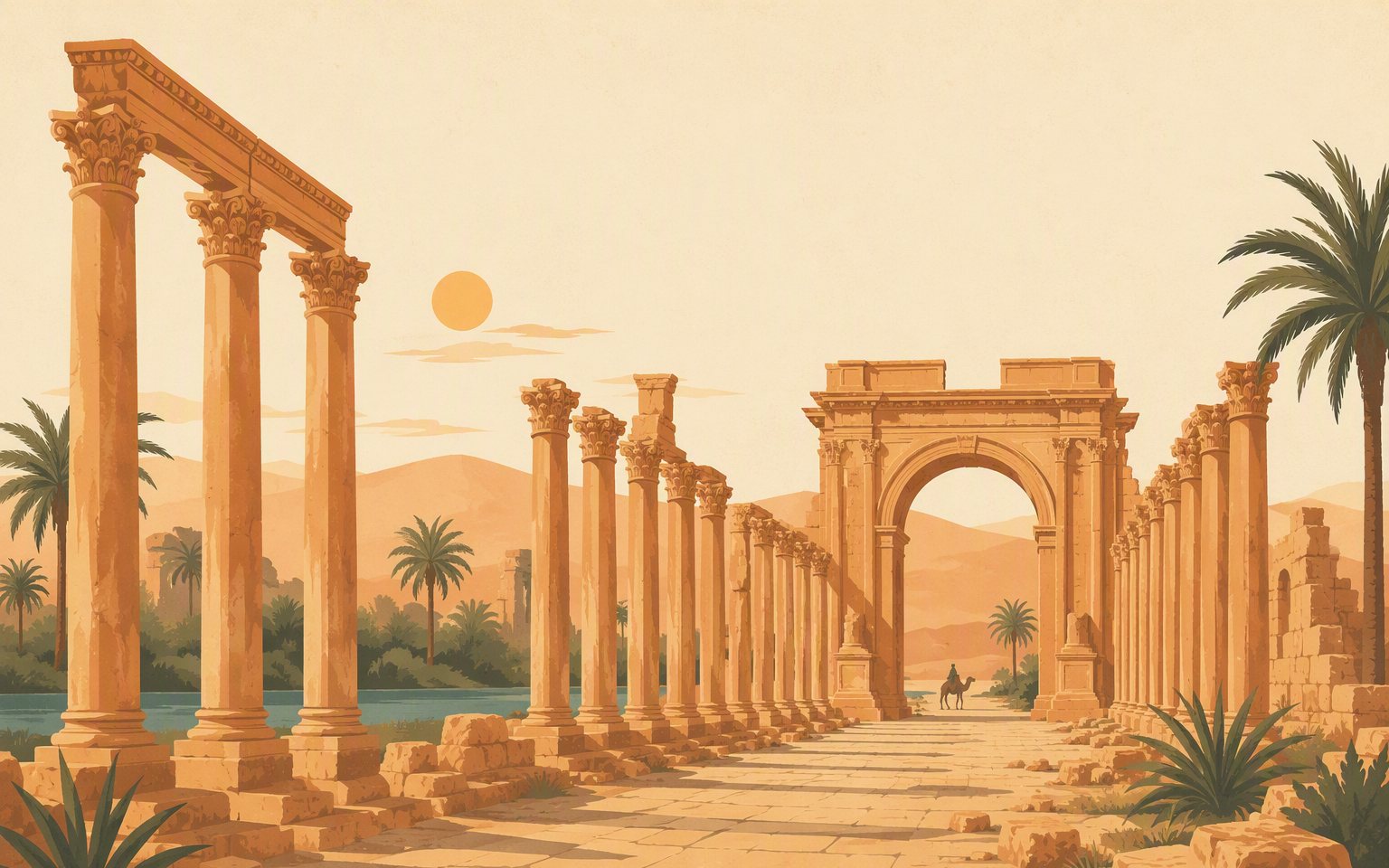
- Palmyra, Bosra, and Dura-Europos: unique Roman theatres, temples, and colonnaded streets
Six Syrian sites are inscribed on the UNESCO World Heritage List. The war after 2011 severely damaged many of them — from Aleppo's souq to Palmyra — and documentation and restoration work continues to this day.