Documents & treaties
From the Ebla tablets to the 2025 constitutional declaration — the documents that wrote Syria's history.
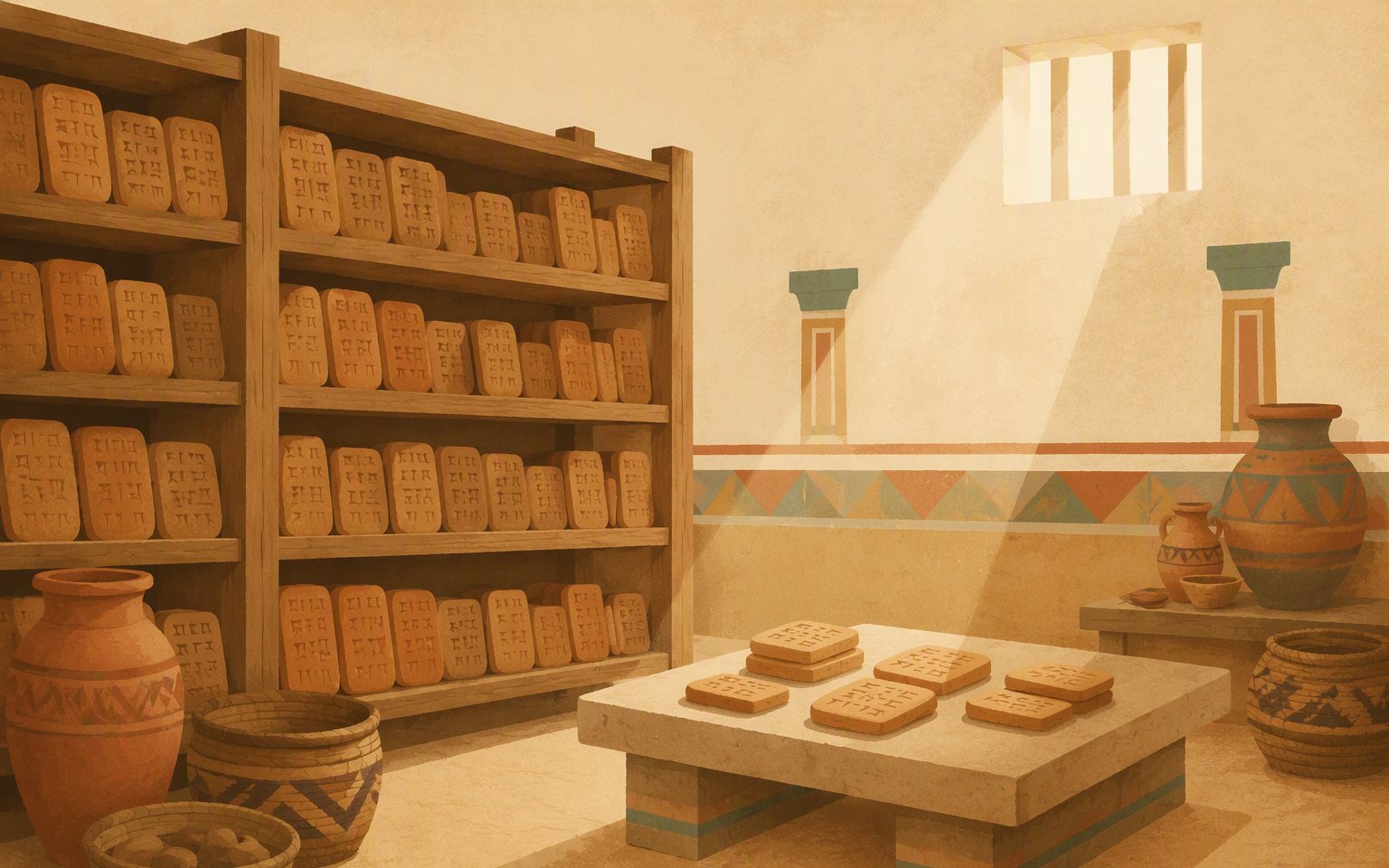
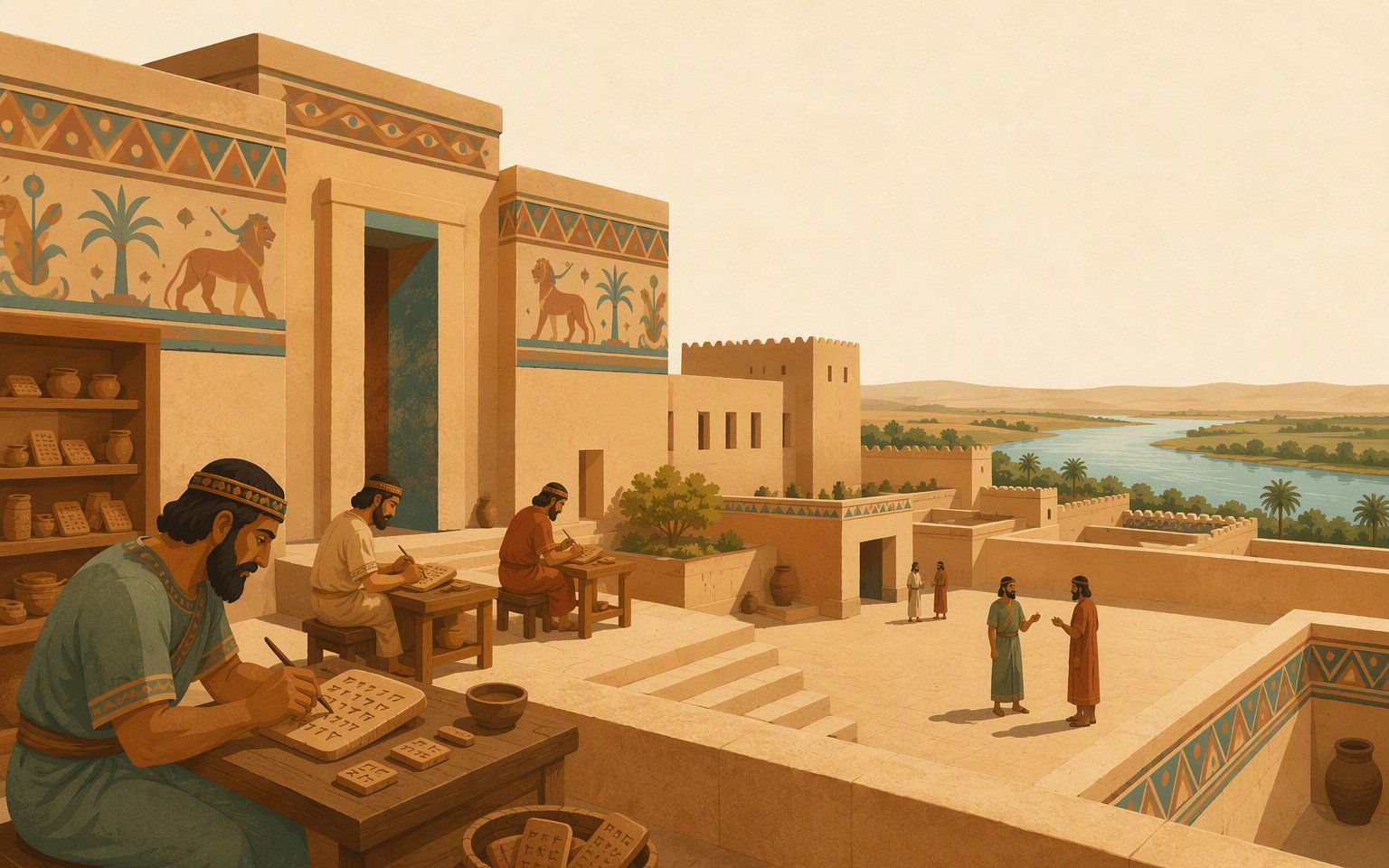
Syria's history is recorded in the documents themselves — from clay to paper. In Ebla, around 2350 BCE, a royal archive of more than 17,000 cuneiform tablets was stored: diplomatic letters, tax lists, treaties, and bilingual dictionaries — the oldest complete state archive to survive from human history. And in Ugarit on the coast, scribes developed around 1400–1200 BCE a cuneiform alphabet of some thirty signs — among the earliest known alphabets in the world — using it to write religious epics and commercial correspondence.
In the modern era, treaties drew Syria's borders and decided its fate:
- the Sykes-Picot Agreement (1916): a secret Anglo-French accord (with Russian assent) to divide spheres of influence in the Arab East after the First World War
- the San Remo Conference (April 1920): placed Syria and Lebanon under French mandate and Iraq and Palestine under British mandate, later ratified by the League of Nations
- the independence of 1946: the evacuation of the last French soldier on 17 April 1946 and the proclamation of the independent Syrian Republic
- the Constitutional Declaration (March 2025): after the fall of the Assad regime in December 2024, transitional president Ahmed al-Sharaa signed a constitutional declaration governing a five-year transitional period
From the clay of Ebla to the treaties of the twentieth century, Syria remained a land where documents were written — and written about — and those documents repeatedly reshaped the entire region.